
Why a Private Conservancy
Changes Everything
The national parks are extraordinary. But for the travellers who come back to Kenya year after year, it’s almost always the conservancy that made the difference.
Private conservancies sit on community-owned land, leased from Maasai landowners and managed in partnership with responsible tourism operators. They are wilder, quieter, and governed by a different set of rules — ones that put the wildlife and the experience first. Here is why we recommend them so consistently, and a handful of camps worth knowing about.
The Case For
What a Conservancy Gives You That a Park Cannot
- No crowds. Ever.In a national park, a leopard sighting can draw twenty vehicles within minutes. In a conservancy, you may be the only car there — for as long as you want to stay. Guest numbers are strictly capped, and in some conservancies there is literally one vehicle per 1,400 acres.
- Night drives and walking safaris.Both are prohibited in Kenya’s national parks and reserves. In a conservancy, they’re standard. A night drive is an entirely different safari — bush babies, aardvark, honey badger, serval, and the occasional leopard moving through the dark. Walking puts you at ground level, where every track and termite mound tells a story your guide already knows.
- Your visit directly funds conservation and community.Conservancy fees go to Maasai landowners as monthly lease payments — providing a reliable income that competes with livestock grazing and agriculture. The model reduces human-wildlife conflict, creates employment, and gives local communities a genuine stake in wildlife survival. You’re not just watching; you’re part of why the animals are still there.
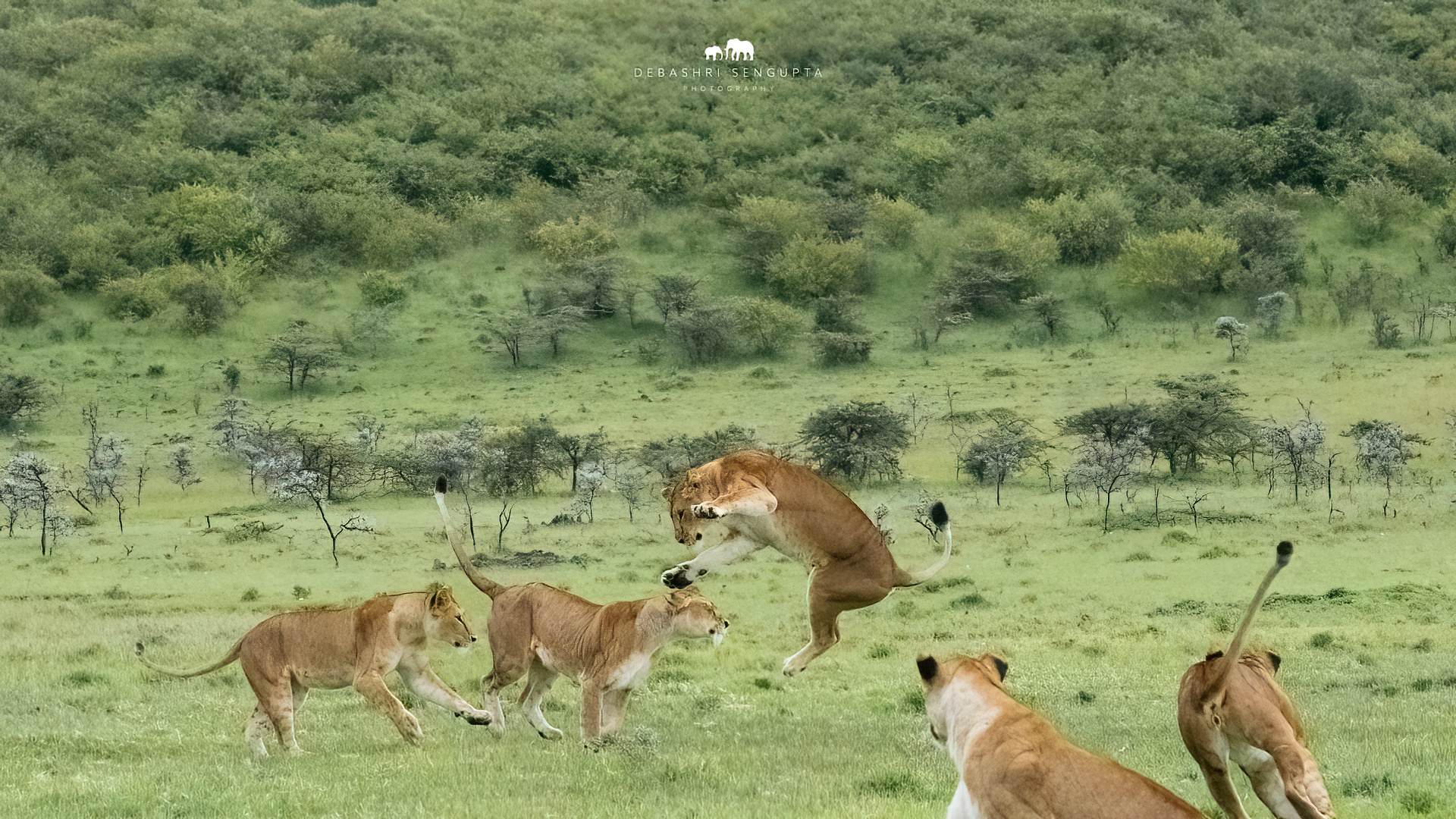
- Unmatched for photography.No vehicle pressure means you can position properly, wait for the right light, and spend as long as needed. The Olare Motorogi and Ol Kinyei conservancies have the highest density of free-roaming lions in Africa — and you’ll have them almost entirely to yourself.
- Off-road access.National parks require you to stay on defined tracks. Conservancies allow off-road driving — meaning your guide can follow an animal properly, position for the light, or cut across the plain to reach something extraordinary before anyone else does.
Kenya’s national parks are extraordinary — the Mara, Amboseli, Tsavo, Samburu. But when clients tell me their safari exceeded every expectation, it’s almost always the conservancy days they can’t stop talking about. The intimacy, the stillness, the sense that the bush belongs entirely to you.

The conservancy difference: vast open wilderness, no crowds, and all the time in the world. Photo: Travel Tom Tom
Camps Worth Knowing
A Few Places We’d Send You Without Hesitation
These aren’t the only conservancy camps in Kenya worth considering — but they’re ones we know well, and each represents something distinct about what this style of travel can offer.

Photo: Porini Mara Camp
Porini Mara, Cheetah & Lion Camps
These are the camps I keep coming back to. Rustic chic — meaning genuinely comfortable, beautifully run, but without the polish that can sometimes make you forget you’re in the wilderness. The guiding is exceptional, the camp sizes tiny (six tents in some cases), and the access extraordinary. Ol Kinyei is one of only three sites in Kenya on the IUCN Green List of Protected Areas, and the Loita wildebeest calve here in January and February — a Migration moment most visitors never see. Olare Motorogi, where Porini Lion Camp sits, has arguably the densest lion population on the continent. These camps won’t dazzle you with infinity pools. They’ll dazzle you with what’s outside your tent at dawn.

Photo: Travel Tom Tom
Porini Rhino Camp
Ol Pejeta is a different Kenya entirely — 90,000 acres in Laikipia, and home to the world’s last two Northern White Rhinos. Porini Rhino Camp is small, unfussy, and brilliantly positioned for the Big Five as well as the chimp sanctuary and lion tracking excursions that make Ol Pejeta genuinely unlike anywhere else in the country. If you want rhinos — and you should — this is where to go.

Photo: Debashri Sengupta
Naboisho Camp — Asilia Africa
If you want the conservancy experience at the luxury end of the spectrum, Naboisho Camp is hard to beat. Asilia are one of the best operators in East Africa, and their guides at Naboisho are among the finest I’ve encountered anywhere — the kind who can read an animal’s behaviour before anything happens, and who make every drive feel like a masterclass. The camp itself is beautiful: spacious, thoughtfully designed, and set in a 50,000-acre conservancy shared with a handful of other small properties. Rates reflect the tier, but the quality is genuine.

Photo: Debashri Sengupta
Tulia Amboseli
Tucked just outside Amboseli National Park within a cluster of community conservancies, Tulia is a quietly excellent camp with one of the most arresting views in Kenya — every tent faces Kilimanjaro, and elephants visit the waterhole in the evenings as if on schedule. The conservancy model here is deeply community-rooted: local teams built the camp, local farms supply the kitchen, and community empowerment is woven into the operation rather than bolted on. It’s a gentler, more contemplative safari than the Mara — and sometimes that’s exactly what a trip needs. Amboseli is also one of the last places on earth where you may encounter a super tusker — elephants whose tusks are so long they brush the ground as they walk. It is a privilege that never loses its weight.
One honest caveat on peak season: conservancy camps are almost always worth the premium — the exclusivity, the activities, and the conservation contribution justify the rates. But peak Migration season (July–October) is worth thinking about carefully.
In the Mara, the river crossings that define the Migration typically happen well inside the reserve — which means conservancy guests often face significantly more driving time to reach them than guests staying in non-conservancy camps right on the Mara River. There are exceptions, and a great guide makes a real difference, but it’s something to factor in if witnessing crossings is the primary goal.
In Amboseli, there is no migration at all. The conservancy premium at peak season has less of a wildlife spectacle to justify it — though if you’ve ever watched the light on Kilimanjaro at sunrise, golden and enormous above the plains, you may decide the colours alone were worth every cent. We’ve seen clients wrestle with that question and land on both sides.
Our usual recommendation: shoulder season in a conservancy. You get the intimacy, the night drives, the walking safaris, and the conservation impact — at meaningfully better rates, and without the crowds that even conservancies can’t entirely escape in peak July and August.
The Bottom Line
The Conservation Model Works — and the Safari is Better for It
Private conservancies represent the best version of what wildlife tourism in Kenya can be: experiences that are richer and more intimate for the guest, and more meaningful for the land and the communities that steward it. Every conservancy stay is a direct vote for that model.
If you’re building a Kenya itinerary and wondering whether to add a conservancy — don’t wonder. Add it. It will be the part you remember most.
Plan Your Safari
Wanderlust Expeditions
East Africa & India Specialists
We work with conservancy camps across Kenya — from rustic and intimate to fully luxury — and match each client to the property that fits their travel style, budget, and what they most want to feel out in the bush.
Every itinerary we design starts with one question: what do you actually want to feel when you’re out there? The rest follows from the answer.
Leave a Reply