Author: WanderlustExpeditions

  • Before the Bush Changes You: An Honest Guide to Your First African Safari

    Before the Bush Changes You: An Honest Guide to Your First African Safari

    Kenya · First Safari Guide

    Before the Bush Changes You

    April 2026 · Wanderlust Expeditions · East Africa & India Specialists

    You’ve read the packing lists. You’ve watched the YouTube videos. You think you’re ready.

    Here’s what I wish someone had told me before my first safari — and what I make sure every Wanderlust Expeditions guest knows before they board their flight. Some of it will surprise you. Some of it might save your trip. All of it is hard-won.

    Lesson One

    Africa Is Not What You’ve Been Told

    Before I ever set foot in Kenya, I thought I knew what to expect. Years of a particular kind of news coverage had done their work quietly. Crisis. Conflict. Cautionary tales. I hadn’t sought it out — it was just what filtered through.

    We landed at Jomo Kenyatta International Airport at 11 at night. Dark, tired, not quite sure what to expect. And then the drive into the city began — and the first thing I noticed was the roads. Wide, smooth, well-maintained. Not what I had, somewhere in the back of my mind, been prepared for.

    I turned to our driver and said: “Wow — your roads are really good!”

    The embarrassment landed immediately. I had spoken like someone raised on nothing but negative headlines — surprised, at a deep level, that things worked. That things were functional. That the default was not what I had absorbed from years of one-sided coverage.

    The full picture came over the days that followed. Nairobi in daylight: cosmopolitan, fast-moving, full of culture and life. The suburbs lush and green. And beyond the city — hills rolling into the distance, fresh fruits and vegetables piled high on roadside stalls, mountains, the kind of landscape that stops you mid-sentence. The people: some of the warmest I have encountered anywhere in the world.

    Kenya humbled me before I had even seen a single animal. It has gone on humbling me, in the best possible way, on every visit since.

    If you are carrying assumptions about Africa — and almost everyone is — Kenya will dismantle them. Let it.

    Kenya landscape

    The Kenya most people don’t expect — and never forget. Photo: Mukula Igavinchi

    Lesson Two

    The Equator Does Not Always Mean Warm

    Kenya sits almost precisely on the equator. Surely it must be hot. I made that assumption, researched everything else obsessively — camps, game drive logistics, immigration — and never thought to check the temperature.

    When we headed out on a pre-dawn game drive in September, wrapped in camp ponchos and clutching hot water bottles the staff had tucked under the blankets, the cold was a genuine shock.

    The Maasai Mara sits at roughly 1,500 metres (4,900 feet) above sea level. September mornings — peak Migration season — can drop to 10–12°C (50–54°F) before sunrise. Pack a proper fleece. Thermals are not overkill.

    The camps will lend you a poncho and tuck a hot water bottle into your bed. But nothing beats arriving prepared — especially when you’re trying to hold a camera steady at dawn.

    A good packing list isn’t a generic checklist. It’s the result of someone who has actually been there, in that season, thinking carefully about your comfort so you don’t have to.

    Wildlife at dawn on the Maasai Mara

    The light at dawn is extraordinary. So is the cold. Come prepared for both. Photo: Debashri Sengupta

    Lesson Three

    Your Guide Will Either Make or Break Everything

    No booking platform can tell you this, because it can’t be packaged into a star rating. The guide is not a nice-to-have. The guide is the entire experience.

    On our first trip, we were happy. We were thrilled. That’s the thing about a first safari — even a mediocre one will blow your mind, because the wildlife itself is incomparable. But it wasn’t until we had a truly exceptional guide that we understood what we had been missing.

    Our first guide was completely dependent on the radio. No tracking, no reading of the landscape, no instinct about where an animal or a pride or a herd might be. Just waiting for someone else to call in a sighting and then driving to it. We didn’t know any different at the time — and we still had a wonderful trip. But we were essentially passengers, not participants.

    The difference revealed itself slowly. One morning, a different guide said calmly: “The cheetah is walking this way.”

    We looked. We scanned. We had binoculars. We saw nothing. Ten minutes later, the cheetah materialised — and our guide had tracked its entire path with naked eyes, without any optical aid at all.

    In Amboseli, a guide who has become a genuine friend told us exactly where the elephant herd would cross. He wasn’t guessing. He knew this herd — their patterns, their routines, their individual personalities. And they crossed exactly where and when he said they would.

    And then there was the morning at the end of June when one of our guides took us out early and said, quietly, that we should pay attention. What we witnessed was the beginning of the wildebeest migration — a full two weeks before it typically starts in earnest. The herds were moving. The plains were alive with it. And we were the only vehicle there. Not one other guest that morning had any idea it was happening.

    That is not luck. That is a guide who knows the land so deeply that he can feel when something is about to shift — and who cares enough to make sure his guests are in exactly the right place when it does.

    The great guides don’t just know animals. They know these animals — this elephant, this cheetah, this pride — by name, by behaviour, by history. That is a completely different thing.

    A great guide identifies an individual from the specific way it moves, the notch in its ear, the tilt of its head. They know who in the pride is dominant today, which cow is protective of a new calf, which male has been pushed out of his territory. With a guide like this, a single sighting becomes a story. Without one, it can feel like ticking boxes.

    At Wanderlust Expeditions, we do not compromise on guide quality. Ever. Finding the right guide for each trip — someone who knows the specific landscape, the specific animals, the specific season — is one of the most important things we do. It is never left to chance, never delegated to a camp’s duty roster, and never treated as a detail. It is the detail.

    Safari guide in the field

    The best guides see what the rest of us can’t. Photo: Debashri Sengupta

    Lesson Four

    Conservancies Will Change How You Think About Safari

    Before our first trip, I had read the word “conservancy” many times. I thought I understood. I did not — not until we were inside one and the difference was impossible to ignore.

    No other vehicles. No queue of vans and Landcruisers jostling for position at a sighting. The freedom to go off-road, to follow an animal at its own pace, to sit in total silence for twenty minutes without anyone hurrying you along. Night drives — simply not permitted in national parks. Walking safaris that put you level with the grass and everything living in it. And the knowledge that your stay directly funds the Maasai landowners whose land this is.

    We fell in love with conservancies on that first trip. Every assumption about what a safari could be dissolved within the first hour. They are now the foundation of almost every Kenya itinerary we build — and explaining them properly to guests, before they travel, is something I consider essential.

    A conservancy doesn’t just give you better game viewing. It gives you a fundamentally different relationship with the wild — quieter, more intimate, and far more honest.

    One thing worth knowing: conservancies are typically more intimate than national parks — and more expensive, because that exclusivity comes at a cost. It is a cost worth understanding before you book, and one we will always walk you through honestly.

    Open conservancy landscape, no crowds

    No crowds. No queue. Just you and the wild. Photo: Debashri Sengupta

    Lesson Five

    The Bush Runs on Relationships

    Inside a conservancy, information flows between guides constantly. Which pride has moved where. Which leopard has a kill up in the fig tree. Where the wild dogs were spotted at first light. This information is currency — and it circulates most freely between people who trust each other.

    If a camp or guide has a reputation for being difficult — for hogging sightings, not sharing information, cutting corners on bush etiquette — that reputation follows them. Other guides stop radioing in tips. Camps stop cooperating. The guest in that vehicle has no idea any of this is happening. They just find themselves arriving at an empty clearing two minutes after something extraordinary occurred.

    As a first-timer, you’ll still be thrilled — the wildlife is extraordinary regardless. But the difference between good and exceptional is often invisible to the guest. It lives entirely in the relationships behind the scenes.

    Knowing the actual reputations of operators, camps, and guides — not their star ratings, but who is trusted and who isn’t — is knowledge that cannot be found on any booking website. It comes from time in the field and years of relationships built on the ground.

    Leopard and cub with kill, silhouetted against a purple dawn sky

    A leopard and her cub with a kill, silhouetted against a purple dawn sky. Without our guide’s relationships on the ground, we would never have been here at the right moment. Photo: Debashri Sengupta

    Lesson Six

    A Famous Operator Is Not the Same as a Good One

    On our first trip, we deliberately booked with two different companies — a budget operator and one of the most celebrated luxury safari names in the world. We wanted to see the difference.

    The budget operator was warm, responsive, and genuinely attentive. The luxury operator was not.

    They had taken exhaustive notes during planning: dietary requirements, preferences, everything. None of it reached the camps. My husband is vegetarian. At a property charging several hundred dollars a night, he was repeatedly served substandard food — an afterthought, not a prepared alternative. Cold. We complained. The camp manager was unbothered.

    The tent was in a state that had nothing to do with the bush. Accumulated grime on uncleaned furniture. Rough linen. Torn rugs. I ended up unwell. At a camp billing itself as luxury.

    We called the operator’s 24-hour line. They called back hours later — after we had already found alternative accommodation ourselves. No follow-up. No conversation with the original camp on our behalf.

    A brand’s reputation is built on its best experiences. Your trip is built on your specific guide, your specific camp, your specific week. Those are not the same thing.

    The same operator pushed camps on us we had explicitly declined, and attempted twice to pass mid-budget properties off as luxury. That is not a miscommunication. That is a warning sign.

    Good safari planning means matching the right camp to the right guest, telling the full truth about every property, and standing behind every recommendation when something goes wrong.

    Finch Hatton's dining area

    Finch Hatton’s Dining Area. This is what the right camp looks like. The difference is always in the details.

    Lesson Seven

    Not Everything You See Online Is Real

    A note on scams

    There are people operating in and around Kenya’s safari circuits who will tell you things that are not true — and some of them are very convincing.

    I know this because I watched it happen to a well-known travel influencer with hundreds of thousands of followers. In a widely circulated video, they visited what they described as the home of Najin and Fatu — the last two northern white rhinos on earth — just thirty minutes from the Maasai Mara. Armed men in ranger uniforms stood guard. The emotion was genuine. The influencer believed every word.

    It was a scam. Najin and Fatu live at Ol Pejeta Conservancy — in an entirely different part of the country. I know this with certainty because I had photographed them at Ol Pejeta earlier that same year — a visit that required advance permissions and coordination with the actual rangers who protect them.

    What the influencer saw were southern white rhinos, presented as the last two northern whites. The video is still up.

    This is not a reason to be paranoid. It is a reason to travel with someone who already knows the difference.

    Najin at Ol Pejeta Conservancy

    Najin, photographed at Ol Pejeta Conservancy — with Zac. Photo: Debashri Sengupta

    Lesson Eight

    Find Someone Who Is As Excited About This As You Are

    Before we booked, there was a third company we never ended up using. Every conversation circled back to budget. “What is your budget? We can’t move forward without a number.”

    The problem was that we didn’t know what a realistic budget looked like. That was precisely why we were asking. We wanted guidance — here is what different levels actually get you, here is what we’d recommend, here is what we’ve seen ourselves. Instead, we hit a wall.

    When they did respond, it took two or three days. One sentence.

    One sentence, in reply to an email full of questions and barely contained excitement about a trip we had been dreaming about for years.

    We wanted someone to share in the excitement. To tell us what they’d seen, what had moved them, what they’d book if it were their trip. Instead, we got a package.

    This pattern — processing an enquiry rather than engaging with a person — wasn’t unique to that company. We felt it with both operators we ultimately booked. The safari was being sold to us, not planned with us. Our questions were obstacles to close, not conversations to have.

    When someone contacts Wanderlust Expeditions, the first thing I want to know is not their budget. It’s what they are hoping to feel. The budget conversation matters and we have it honestly — but only after I understand who I’m planning for.

    And yes — I will tell you what I’ve seen. Which camp left me speechless and which disappointed me, and exactly why. What I would book if I were going tomorrow. I love this work. I love Kenya. I love watching someone fall in love with the bush for the first time. That is what you will feel from me from the very first message — because it’s genuine.

    A sighting that only happens when your operator truly knows the bush

    This is what it looks like when passion for the work meets years of knowledge on the ground. Photo: Debashri Sengupta

    Lesson Nine

    The Unfenced Camp Will Frighten You. Go Anyway.

    I want to be honest about this one, because I know I am not alone.

    Before my first trip, the idea of sleeping in an unfenced camp — a tent in the open bush, no barrier except the canvas between me and the wild — terrified me. Not mildly concerned. Genuinely terrified. The fear was acute enough that I almost didn’t go to Africa at all.

    My family insisted. Reluctantly, I went.

    And before I go further — if the unfenced camp is truly not for you, that is completely fine. Fenced camps are available at all our destinations, and there is no pressure whatsoever to choose otherwise. We will talk it through with you and find the right fit.

    What the safety infrastructure actually looks like

    At a well-run unfenced camp, you are never left alone in the dark. Maasai warriors guard the perimeter throughout the night — present in a way that is both deeply practical and, once you understand it, genuinely reassuring. After dark, a staff member always walks you between your tent and the main areas. Always.

    Before your first evening, you receive a full briefing: which sounds need attention, which are simply the bush being the bush, what to do, and what not to do. These are not formalities. They are the product of generations of knowledge about how animals and humans share the same space.

    Choosing the right unfenced camp — one with experienced staff and a genuine culture of care — is part of what we do at Wanderlust Expeditions before you ever pack a bag.

    The first couple of nights were not easy. Every rustle felt significant. Every distant sound pulled me awake.

    And then, gradually, something shifted.

    The darkness stopped feeling like a threat and started feeling like a presence. And then — the sounds. Lying in your tent at night, you hear the bush in a way that is completely unlike anything else. Animals moving. Something calling in the distance. The low rumble of something large, unhurried, entirely unbothered by your existence. It is astonishing. There are no words that fully capture it — you simply have to be there.

    Somewhere in the middle of the night, I realised I was no longer afraid. The fear had become something else entirely — wonder.

    Predators are not looking for humans to attack. They have their food, their territory, their lives. Respect their space and they will respect yours. Once that truth settles in your body, everything changes.

    By the end of the trip, the unfenced camp was my favourite thing about the whole experience. You are not a visitor peering in through glass. You are a guest in a place that was not built for you — and that, it turns out, is exactly where you want to be.

    If this fear is holding you back: I felt exactly what you are feeling. Go anyway.

    🦛 A small but important caveat

    On one trip, our tent happened to be positioned next to a hippo pool. We were, consequently, serenaded by an entire hippo family for the duration of the night. Hippos are not dangerous in this context — they come ashore after dark to graze on the grass, which is entirely their right. But there is, it turns out, no such thing as a quietly grazing hippo. The grunting was magnificent. Continuous. Operatic.

    We did not sleep.

    If grunting hippos are not your preferred soundtrack for a night in the bush, do let us know — we’ll do our very best to find you a tent away from the hippo pool. Hopefully. We say hopefully because if there are hippos in the area, they are entirely capable of wandering wherever they please — including, on occasion, past tents that were supposed to be hippo-adjacent-free. They did not receive the memo. They never do.

    Porini Mara Camp exterior at dusk

    The bush, right outside your door. Photo courtesy of Porini Mara Camp.

    A Practical Note

    On Cost: What Looks Expensive Usually Isn’t

    Safari is not cheap. I will never pretend otherwise. But the sticker price is almost never the full story — and once you understand what is actually included, the value looks very different.

    Almost everything except your international flights is covered in your quote. Accommodation, all meals, game drives, park and conservancy fees, domestic transfers, often drinks and laundry too. When you compare a safari against any other international holiday and account for what you’d spend separately on hotels, restaurants, transport, and activities — the numbers often surprise people.

    I occasionally have enquiries for super-budget options. My answer is always honest: Wanderlust Expeditions doesn’t operate at that end of the market, and the reason is simple — your experience matters too much. A camp with questionable hygiene, an uncomfortable vehicle with broken seats, uncertain drinking water, or inadequate security is not somewhere you will enjoy your trip. The savings are not worth it. You deserve better than spending your safari worrying about the basics.

    Choose wisely. A safari done well is worth every penny. A safari done poorly is still expensive — and you’ll spend the whole trip wishing it were different.

    There is a range within “good” — mid-range to luxury — and we will work with your budget honestly within that range. But the floor exists for a reason, and I will always tell you where it is.

    What Good Looks Like

    When the Planning Is Done Right, You Just Show Up

    Let me tell you about a trip we planned and hosted not long ago. It is the clearest illustration I have of what this work looks like when it’s done properly.

    I should say — hosted tours are one of the things we do at Wanderlust Expeditions, not the only thing. Many of our guests travel independently with an itinerary we’ve built for them. But when I’m there in person, I get to see it all unfold firsthand. And what I saw on this trip was a reminder of why I do this.

    It begins before the plane lands. For first-time travellers, we arrange a concierge service that meets guests right outside the jet bridge — before immigration, before the luggage carousel, before any of the gentle chaos of an unfamiliar airport. They walk you through the immigration lines, stay with you at the carousel, and remain by your side until you are settled in the vehicle on your way to your first night’s accommodation. You land in a new country and someone is already there, calm and ready.

    The preparation behind that moment started months earlier. A real conversation about who this person was, what they wanted to feel, what mattered to them. A walk through every camp option — not just highlights, but honest trade-offs. This lodge has extraordinary game viewing but a longer transfer. That conservancy offers more intimacy, but comes at a higher price point. Here is what each decision actually means for your experience.

    Then the logistics — the part most operators treat as overhead and that I find genuinely absorbing, because it is where a trip is won or lost. Sitting down together to walk through the visa application step by step. Multiple calls until every question was answered. A packing list specific to the camps, the season, and the person — not a template.

    I was there when the vehicle stopped and a lion appeared for the first time in the long golden grass. I was watching when they saw their first rhino. I was there for the baby elephants, which produced the kind of helpless, delighted laughter that only the wild can cause in grown adults.

    Watching someone experience their first safari — really experience it, not just photograph it — is one of the great privileges of this work. It never gets old.

    During the trip, I stayed attentive. Some guests want their guide to narrate every moment. Others want silence. I pay attention and adjust — communicating directly with camp staff so the experience stays calibrated to the guest, not the itinerary.

    What I hear most often afterwards: that they didn’t need to worry about anything. That they simply arrived, and it was extraordinary.

    That is not an accident. It is the result of careful, passionate, detail-obsessed preparation — the kind that starts long before anyone boards a plane, and continues until they are safely home.

    Baby elephants on safari

    Baby elephants. They get everyone, every time. Photo: Debashri Sengupta

    Why Wanderlust Expeditions

    The Safari You Deserve Starts Before You Leave Home

    Safari planning is not a service we offer on the side. It is the entire point. Every detail — the right camp, the right guide, the right season, the right preparation — is thought through with genuine care and hard-won knowledge.

    ✈️From the Jet Bridge OnwardsFor first-time travellers, we arrange a concierge service that meets you right off the plane — guiding you through immigration, handling your luggage, and staying with you until you’re in your transfer vehicle.
    🧭Deep Destination KnowledgeWe’ve been there. We know the camps, guides, and conservancies — not from brochures, but from personal experience and years of on-the-ground relationships.
    📋End-to-End PlanningFrom the first conversation to the visa application to the packing list — every detail handled, anticipated, and followed through. Nothing falls through the cracks.
    📞Real Support on the GroundIf something goes wrong, we act. Not hours later. Not with a follow-up that never comes. We take responsibility for every experience we build.

    The Bottom Line

    Your First Safari Should Be Unforgettable — for the Right Reasons

    The cold air on the Mara before dawn. A cheetah materialising from grass that looked empty sixty seconds ago. An elephant herd crossing exactly where your guide said they would. Lying in your tent at night, listening to the bush breathe around you — and realising the fear has become something else entirely — wonder. And a country that dismantles every assumption you arrived with, and replaces them with something far better: the real thing.

    These things are real and they are waiting for you. The difference between a trip that delivers them and one that almost does is almost always the same: preparation, knowledge, and someone who cares enough to get every detail right.

    That’s what we’re here for.

    Plan Your First Safari

    Wanderlust Expeditions

    East Africa & India Specialists

    Tell us who you are and what you want to feel out there. We’ll take care of everything else — from the packing list to the perfect guide to the camp that will make your jaw drop.

    The rest follows from the answer.
    Get in touch

    Ready to start planning your first safari?

    Start the Conversation

    Wanderlust Expeditions  ·  East Africa & India Safari Specialists  ·  Conservation-Focused Travel

  • Into the Wild: Witnessing a Lion Pride’s Most Sacred Moment

    Into the Wild: Witnessing a Lion Pride’s Most Sacred Moment

    Kenya Safari Stories

    Into the Wild: Witnessing a Lion Pride’s Most Sacred Moment

    April 4, 2026 · Wanderlust Expeditions · East Africa & India Specialists

    There are moments on safari that stop your breath — not because of danger, but because of pure, raw wonder. This was one of those moments.

    Deep in the Ol Kinyei Conservancy, a lioness named Nempiris was about to introduce her newborn cubs to her pride. We had front-row seats. No crowd. No other vehicles. Just us, our guide, and a ritual playing out exactly as it has for thousands of years — witnessed, for once, in complete silence.

    The Setting

    The Conservancy That Makes It All Possible

    Nestled near the Maasai Mara National Reserve in Kenya, Ol Kinyei Conservancy is not your typical safari destination. It is a living model of what conservation looks like when done right — where local Maasai communities are partners, not bystanders. Local guides are employed, cultural heritage is preserved, and the wildlife is protected not by fences but by genuine, shared purpose.

    At Wanderlust Expeditions, we work with the best camps in conservancies like Ol Kinyei. Why? Because conservancies give you something the big national parks simply cannot: intimacy. No shared vans, no tourist convoys — just a proper safari vehicle, your guide, and the wild unfolding entirely on its own terms. What we witnessed that morning was possible only because of where we were — and who we were with.

    Nempiris with her two cubs in the golden grass of Ol Kinyei Conservancy

    A new mother, endlessly devoted — even when exhausted. Photo: Debashri Sengupta

    A Mother’s Vigil

    Waiting for the Right Moment

    That year, drought had gripped the land. Nempiris had given birth to two cubs, but they were small — scrawnier than normal — and she was not ready to risk them. So she waited. Hidden away from the rest of the pride, she nursed them, protected them, and bided her time until they were strong enough.

    We found her one morning as the sun was climbing, the cubs tumbling over each other in the golden grass while she watched them with the quiet intensity only a mother can muster. Then something shifted. Nempiris sat up. Her ears swivelled forward. Her eyes locked on the horizon.

    We saw nothing. But she knew.

    Nempiris on high alert, scenting the air for her approaching pride

    A scent on the breeze — friend or threat? Every instinct engaged. Photo: Debashri Sengupta

    The Reunion

    The Pride Makes Its Approach

    Slowly, shapes emerged from the bush. Our guide — one of the finest Maasai naturalists working the conservancy, and a favourite of ours — identified them quietly: Nempiris’ own pride. Even so, Nempiris stayed coiled, watchful. The cubs played on, oblivious to the significance of what was happening around them.

    The pride halted at a respectful distance, as if they understood the protocol. Then, one young lioness broke from the group and walked forward alone — deliberate, gentle, her eyes fixed on Nempiris. It was her daughter from a previous litter. An older sister, meeting her new siblings for the very first time.

    The cubs launched themselves at her as if they already knew she was theirs. Instinct, or something closer to love — in that moment, it was impossible to say.

    What happened next was tender beyond words. The young lioness greeted her mother first — nuzzling, licking, rumbling with soft purrs. Then she turned to the cubs. And the cubs, as if they already knew she was family, launched themselves at her with complete abandon.

    Nempiris' daughter steps forward to greet her mother after months apart

    Months apart. Not a beat of trust lost. Photo: Debashri Sengupta

    The cubs shove between Nempiris and their elder sister, demanding attention

    The little ones shove their way in — as younger siblings do. Photo: Debashri Sengupta

    Order in the Pride

    Authority, Absolute and Unquestioned

    As the elder sister took over entertaining the cubs, Nempiris turned her attention to the rest of the pride. The lionesses edged closer, one by one, in a careful, choreographed dance of introduction. And then a young male tried to approach.

    One step. Two.

    Nempiris’ snarl cut through the morning air like a crack of thunder. He froze. Sat down. Sulked. Our guide explained it with quiet amusement: the young males weren’t dangerous on purpose — but the cubs were still tiny, and one clumsy paw could cause real harm. The mother’s authority was absolute, and the pride respected it completely. His introduction would have to wait.

    A young male lion sits back, ordered away from the cubs by Nempiris

    Not yet. He’ll meet them when Nempiris decides he’s ready. Photo: Debashri Sengupta

    The elder sister takes charge of the cubs, guiding and entertaining them

    Part babysitter, part teacher — the elder sister steps up. Photo: Debashri Sengupta

    The Language of Lions

    Learning to Be a Pride

    With the elder sister in charge, the cubs began to bloom before our eyes. They stood taller. They ventured a little further. They even — and this made our entire vehicle laugh with delight — let out tiny, utterly serious roars in perfect unison with their big sister, as if rehearsing the language of their pride for the very first time.

    And by the end of it, watching one of the cubs swagger through the grass with a confidence he absolutely had not possessed an hour before, it felt like we had witnessed something profoundly human: a family knitting itself back together, one careful step at a time. The vehicle was completely silent. Nobody wanted to break the spell.

    Being in a conservancy meant we could bear witness to this elaborate, almost human ritual without a crowd. That silence — that stillness — is something no national park can give you.

    Two cubs roar in unison with their elder sister — small roars, enormous hearts

    Small roars. Big hearts. Learning to be lions. Photo: Debashri Sengupta

    A cub strides confidently through the grass — he knows where he belongs now

    He knows where he belongs now. You can see it in every step. Photo: Debashri Sengupta

    Why Travel With Us

    The Safari That Makes This Possible

    What made this morning possible wasn’t luck. It was time, access, and expertise — three things Wanderlust Expeditions delivers on every single Kenya safari.

    We know Nempiris by name. We know which conservancies have the access and intimacy that national parks cannot offer. And we know how to stay — quietly, patiently, without intruding — until the wild gives you something you will carry for the rest of your life.

    🦁The Right PlaceWe work with the best camps in conservancies like Ol Kinyei — where vehicle numbers are capped, wildlife behaves naturally, and you may be the only vehicle at a sighting for hours.
    🧭The Right GuideThe finest Maasai naturalists in the conservancy — people who know these animals by name, read their behaviour before anything happens, and make every drive feel like a masterclass.
    ⏳The Right PaceWe never rush a sighting. We stayed with Nempiris and her cubs for hours. No other vehicle crowded us. No schedule pulled us away. This is what safari should feel like.
    🌿Conservation That CountsEvery conservancy stay directly funds Maasai landowners and community livelihoods — making your visit part of the reason these animals are still here, wild and thriving.

    The Bottom Line

    You Can Visit Kenya on Any Tour. To Witness It, You Need the Right One.

    A pride introduction happens once. A mother’s snarl cutting across a silent morning happens once. A cub finding its swagger in front of your eyes — once. These are not moments you stumble into. They are moments you earn, with the right place, the right guide, and the patience to let the wild move at its own pace.

    Wanderlust Expeditions exists for exactly this. If you are ready to stop watching wildlife and start witnessing it — we are ready to take you.

    Plan Your Safari

    Wanderlust Expeditions

    East Africa & India Specialists

    We design Kenya safaris around conservancies like Ol Kinyei — intimate, ethical, and built around what you most want to feel when you’re out there in the bush.

    Tell us who you are and what matters to you. We’ll build the rest.

    Get in touch

    Ready to start planning your Kenya safari?

    Start the Conversation

    Wanderlust Expeditions  ·  East Africa & India Safari Specialists  ·  Conservation-Focused Travel

  • Where to See Tigers in India

    Where to See Tigers in India

    India Wildlife Safaris

    Where to See Tigers
    in India

    March 29, 2026 · Wanderlust Expeditions · East Africa & India Specialists

    India is home to more than 70% of the world’s wild tiger population. These are not animals you see easily or predictably — and that is precisely what makes the encounter, when it comes, so extraordinary.

    There are over 50 tiger reserves across India, from the sal forests of central India to the mangrove deltas of West Bengal. Each one is different — in landscape, in atmosphere, in the kind of experience it offers. Here is an honest guide to the ones worth your time, and what to expect from each.

    Our Top Picks

    Three Parks We Recommend Most

    We know India’s tiger reserves well — more than just these three. But Tadoba, Kanha, and Pench are the ones we recommend most consistently, because they are exceptionally well-managed, the tiger sightings are genuinely strong, and the overall experience holds up regardless of when you visit or what luck the forest offers. These are not our only choices. They are our most reliable ones.

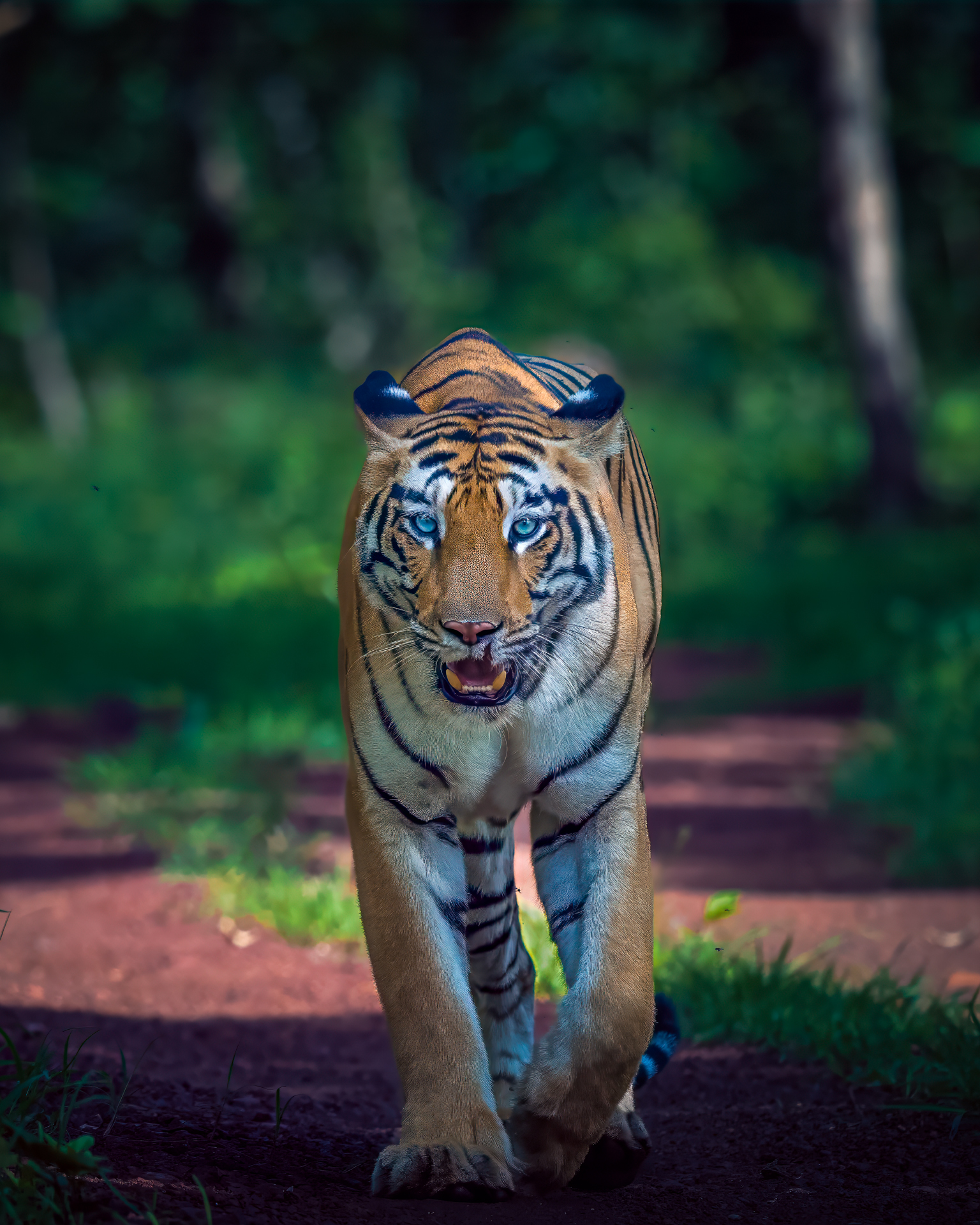
    Royal Bengal Tiger at Tadoba Andhari Tiger Reserve, Maharashtra

    Photo: Debashri Sengupta

    MaharashtraBest for sightings
    Tadoba Andhari Tiger Reserve

    Tadoba

    If you want the highest chance of seeing a tiger, Tadoba is where to go. Maharashtra’s largest tiger reserve is home to over 90 tigers — one of the densest populations in India — and the relatively open terrain around its lakes and waterholes means sightings here are more reliable than almost anywhere else in the country. This is a dry deciduous forest of teak and bamboo, with a network of lakes that draw wildlife in the heat of the afternoon. Tigers here have grown accustomed to safari vehicles and will often walk past at close range, entirely unbothered.

    Tadoba is easily accessible — just two and a half hours from Nagpur airport — and the quality of lodges around the reserve has improved enormously in recent years. The Moharli and Kolara zones are the most productive; advance booking is essential as permits sell out quickly, particularly on weekends. Beyond tigers, look for leopards, sloth bears, dholes, gaur, and the huge variety of birdlife around the reserve’s waterbodies.

    Tiger walking through the misty sal forest — Kanha Tiger Reserve, Madhya Pradesh

    Photo: Debashri Sengupta

    Madhya PradeshMost beautiful forest
    Kanha Tiger Reserve

    Kanha

    Kanha is, for many, the most beautiful national park in India. Spread across 940 square kilometres of Madhya Pradesh’s Maikal Hills, it is a landscape of rolling meadows, dense sal and bamboo forest, crystal clear streams, and open grasslands that Rudyard Kipling drew upon for The Jungle Book. The forest here feels ancient and alive in a way that is difficult to describe until you are in it.

    Kanha is home to around 100 Bengal tigers, but it is also the only place on earth where you can see the hard-ground barasingha — a magnificent swamp deer that was rescued from near-extinction through one of India’s most celebrated conservation programmes. In 1970, just 66 individuals remained. Today the herd numbers in the hundreds, and the sight of them grazing in Kanha’s meadows at dawn is something that stays with you. The park is also exceptional for leopard, dhole, sloth bear, gaur, and over 300 species of birds.

    Leopard in Pench Tiger Reserve — the forest is home to far more than tigers

    A leopard in Pench — a reminder that the forest offers far more than tigers. Photo: Debashri Sengupta

    MP / MaharashtraThe Jungle Book
    Pench Tiger Reserve

    Pench

    Pench straddles the border of Madhya Pradesh and Maharashtra, and it is widely considered to be Mowgli’s forest — the landscape Kipling had in mind when he wrote The Jungle Book. It is easy to see why. The teak forest here is open and luminous, with grasses that turn a stunning pink in winter. It is easy to understand why Kipling chose this landscape for The Jungle Book — the forest has a storybook quality that other reserves simply don’t replicate. Dense enough to feel genuinely wild, open enough to watch a tiger move through the trees at a distance.

    The prey base at Pench is extraordinary — some of the largest in any Indian reserve — which sustains a healthy tiger population as well as an impressive number of large male tigers. It is also one of the finest birding destinations in central India, with over 210 species recorded. For those combining wildlife with a sense of literary history, there are few more evocative places in India.

    Honest Assessments

    Other Reserves — the Full Picture

    These three reserves come up constantly in conversations about India tiger safaris. All are worth knowing about. All have genuine strengths. And all have limitations we think travellers deserve to understand before they book.

    • 🏰
      Ranthambore, RajasthanThe appeal: Undeniably beautiful — ancient Mughal fort ruins rising above the jungle, with tigers that have been photographed lounging beneath centuries-old arches. Combines naturally with Rajasthan’s palaces and heritage cities.The honest reality: Ranthambore is one of India’s most chaotic reserves. Vehicle numbers are high, including large “Canter” buses carrying up to 18 people, which are disruptive to any genuine wildlife experience. Management has been inconsistent, and the quality of sightings varies enormously by zone — only a handful of zones consistently deliver. It is not a reserve we recommend for anyone whose primary goal is a quality tiger watching experience. For heritage travel combined with a wildlife introduction, it has its place. For serious wildlife, there are better options. That said — Ranthambore has its loyal advocates, and we respect that. For some travellers, the magic of watching a tiger against those ancient fort walls is worth everything else.
    • 🌿
      Bandhavgarh, Madhya PradeshThe appeal: One of the highest tiger densities in India, and the sightings can be extraordinary — close, intense, and prolonged. The tigers here are highly habituated to vehicles and will often allow very near approaches. Regularly combined with Kanha and Pench on a central India circuit.The honest reality: Bandhavgarh’s popularity is also its weakness. It can get chaotic, particularly at peak season, with multiple vehicles converging on the same sighting. That said, for sheer tiger action, it delivers — and with careful zone selection and timing, the experience can be genuinely excellent. It also has its passionate devotees — there are travellers who swear by Bandhavgarh above all other reserves, and for the right person, at the right time, we completely understand why.
    • 🏔️
      Jim Corbett, UttarakhandThe appeal: India’s oldest national park and the birthplace of Project Tiger. Set in the foothills of the Himalayas along the Ramganga River — dense riverine forest, elephant grasslands, and the mountains framing every scene. Exceptional for elephants, leopards, and birdlife.The honest reality: Corbett is vast, and safari durations are short. The chances of a tiger sighting are lower than in central India’s reserves. Go for the landscape, the elephants, and the atmosphere rather than for tiger sightings specifically.
    • 🌾
      Panna, Madhya PradeshThe appeal: One of India’s most remarkable conservation comeback stories. Panna lost all of its tigers to poaching in the late 2000s — and then brought them back through a determined reintroduction programme. The Ken River cuts through dramatic gorges, the birdlife is exceptional, and it has a quieter, less crowded feel than better-known reserves.The honest reality: Tiger sightings are still less predictable than at Tadoba, Kanha, or Pench. But for travellers wanting to witness conservation in action, or combining a Madhya Pradesh circuit with something off the well-worn path, Panna is a rewarding addition.

    A tiger sighting is never guaranteed — and that is the point. The forest gives you what it gives you. Every safari is different, and that uncertainty is not a flaw in the experience. It is the experience.

    The Indian jungle at dawn — the stillness before the forest wakes

    Photo: Debashri Sengupta

    For the Adventurous

    Off the Beaten Track — Three Forests Worth the Effort

    These are not the reserves you will find in standard safari brochures. They are wilder, less visited, and — in the right hands — capable of extraordinary encounters. A word of honest warning before we begin: the safari infrastructure across all three is significantly behind that of the better-known parks. Accommodation options are limited and often basic, vehicles are not always well-maintained, and the quality of guides can be inconsistent. These are forests for travellers who prioritise the experience of genuine wilderness over comfort, and who understand that the trade-off is real. With the right planning and local knowledge — which is where we come in — the rewards are considerable.

    • 🐆
      Umred-Karhandla, MaharashtraWhy it’s special: A small, relatively unknown sanctuary in Maharashtra, connected to Tadoba by the Wainganga River forest corridor. At just 189 square kilometres it is compact, but vehicle numbers are strictly capped at 20 per session — meaning the experience is quiet and unhurried. Beyond tigers, genuinely excellent for leopard, dhole, sloth bear, gaur, and rarities including pangolin, honey badger, and flying squirrel. Easily paired with a Tadoba or Pench visit given its proximity to Nagpur.The honest reality: Infrastructure is basic — lodge options are limited, vehicles vary in quality, and guiding standards are patchy. A forest for those who can tolerate rougher edges in exchange for something genuinely off the radar.
    • 🦏
      Dudhwa, Uttar PradeshWhy it’s special: One of India’s most underrated reserves. Dudhwa sits along the Indo-Nepal border in the Terai — sal forest, tall grasslands, shallow lakes, and wetlands that feel genuinely remote. It is the only reserve in India where you can see both tigers and one-horned rhinoceroses — rhinos were reintroduced from Assam in the 1980s and around 40 now roam the reserve. The barasingha are here in healthy numbers, birdlife is exceptional at over 450 species, and a visit to the Tharu tribal villages on the boundary adds a cultural dimension few Indian wildlife destinations can match. The reserve carries the legacy of legendary conservationist Billy Arjan Singh, who spent his life fighting for these forests.The honest reality: Dudhwa is remote, and the infrastructure reflects that. Accommodation is limited — forest rest houses and a handful of basic lodges — and logistical planning requires more effort than a Tadoba or Kanha trip. Guiding quality varies significantly. But for the right traveller, the rawness of Dudhwa is precisely the point.
    • 🌿
      Pilibhit, Uttar PradeshWhy it’s special: Pilibhit is, quietly, one of India’s most exciting tiger reserves right now — and almost nobody outside serious wildlife circles knows it. Sighting rates are surprisingly high, crowds are minimal, and the Terai male tigers here are notably large, carrying a physical presence that sets them apart from their central Indian cousins. The landscape is diverse and beautiful — sal forest, alluvial grassland, wetlands along the Sharda River — and the reserve is home to five of India’s seven deer species. For anyone who wants a forest that feels truly untouched, Pilibhit delivers.The honest reality: Pilibhit is poorly managed in ways that are specific and frustrating. Barriers across the safari routes are opened and closed manually every few minutes, breaking the rhythm of every drive. Some zones run alongside a canal where locals picnic freely — hardly the immersive wilderness experience you came for. Safari vehicles are also required to stop at designated rest areas that consume a meaningful chunk of your limited time in the forest. Add limited and basic lodging, unreliable vehicles, and guides who range from excellent to barely adequate — and Pilibhit becomes a forest that genuinely rewards those who know how to navigate it. The forest itself is gorgeous, and the tigers are real. If you can make peace with the management, the experience is worth it.

    A World Apart

    The Sundarbans — India’s Other Tiger Safari

    Everything described above takes place in jeeps, on defined tracks, in forests you can walk into. The Sundarbans is none of those things.

    Straddling the India-Bangladesh border at the mouth of the Ganges delta, the Sundarbans is the world’s largest mangrove forest — a UNESCO World Heritage Site of tidal rivers, creeks, and dense jungle that is accessible only by boat. There are no roads. There are no jeep tracks. You drift through narrow channels in a small vessel, watching the mangrove roots rise from the muddy water, listening for the sounds of the forest beyond the riverbank.

    The tigers of the Sundarbans are different from those of central India. They have adapted to a world of saltwater and tides, swimming freely between islands and hunting along the riverbanks. They are rarely seen — the dense vegetation makes the forest almost impenetrable to the eye — and the chance of a sighting is genuinely low. But it does happen. A tiger emerging from the mangroves to cross a river, swimming strongly through the current, is one of the rarest and most extraordinary wildlife moments India can offer.

    Come to the Sundarbans for the landscape, the birds, the saltwater crocodiles, the Gangetic dolphins surfacing alongside the boat, and the profound sense of wilderness. Come knowing a tiger may remain hidden. And come knowing that if one does appear, it will be unlike any tiger encounter you have ever had — or will have again.

    Best visited October to early January, when the weather is cool and wildlife is most active. Late January is still manageable — I have been then — but from February onwards the heat begins to build noticeably, and by March conditions are uncomfortable enough that the experience is meaningfully diminished. Not a time we recommend. Accessible from Kolkata.

    Why Travel With Us

    India, the Way It Should Be Experienced

    I was born in India. I have spent a lifetime exploring its forests, learning its languages, and building relationships with the guides, naturalists, and local experts who make a truly exceptional safari possible. When I take you to India, I am not sending you — I am taking you.

    India rewards those who know how to navigate it. The permit systems, the best zones within each reserve, the right lodges, the guides who have spent decades reading the forest — these things take years to learn and relationships to access. This is what Wanderlust Expeditions brings to every India itinerary.

    🗣️Languages & Local KnowledgeFluent in 4–5 Indian languages, I can communicate directly with guides, naturalists, and local communities in a way that transforms the depth of every experience.
    🧭End-to-End India ManagementEvery transfer, permit, lodge, flight, and guide is arranged from the ground up. No third parties, no hand-offs. Your entire trip is managed by someone who knows the country intimately.
    🐯The Best Guides & NaturalistsAccess to India’s finest wildlife naturalists — people who have spent decades in specific reserves and whose knowledge goes far beyond what any general guide can offer.
    🚗Seamless Road TransportComfortable, reliable road transportation throughout — the right vehicle for the terrain, experienced drivers, and none of the uncertainty that comes with unfamiliar ground.
    👨‍👩‍👧‍👦Every Kind of TravellerSolo travellers, couples, families, seniors, small groups, ladies-only groups, photography-focused trips — every itinerary is designed around who you are and what you want to feel.
    🏛️Cultural ImmersionIndia is not just its forests. Heritage temples, Mughal forts, tribal village visits, local markets, regional cuisine — woven seamlessly into any wildlife itinerary for a richer, fuller picture of the country.
    📸Photography ExpertiseFor wildlife photographers, we arrange dedicated photography safaris with vehicles set up for long lenses, optimal zone selection, and naturalists who understand how to position for the shot.
    ❤️Genuine PassionWildlife travel is not a product we sell — it is something I live. That passion shapes every decision, from lodge selection to guide briefings to the stories shared around the fire at the end of a long day in the jungle.

    Final Thought

    India Will Surprise You, Every Time

    No two tiger safaris in India are the same. The forest changes with the season, the light changes with the hour, and the animals move on their own terms entirely. What India offers — in every reserve described here, from the open waterholes of Tadoba to the ghost-quiet channels of the Sundarbans — is an encounter with wildness that feels genuinely unmediated.

    If you have been to Kenya and want to understand what the other half of Wanderlust Expeditions does — this is it. Same passion, different jungle. Come and see.

    Plan Your India Safari

    Wanderlust Expeditions

    East Africa & India Specialists

    We design bespoke India wildlife safaris — from tiger circuits in central India to the mangrove deltas of the Sundarbans — combining exceptional wildlife access with cultural depth and end-to-end local expertise.

    Tell us who you are and what you want to feel. We’ll build the rest.

    Get in touch

    Ready to start planning your India tiger safari?

    Start the Conversation

    Wanderlust Expeditions  ·  East Africa & India Safari Specialists  ·  Conservation-Focused Travel

  • Why a Private Conservancy Changes Everything

    Why a Private Conservancy Changes Everything

    Kenya Safari Planning

    Why a Private Conservancy
    Changes Everything

    March 21, 2026 · Wanderlust Expeditions · East Africa & India Specialists

    The national parks are extraordinary. But for the travellers who come back to Kenya year after year, it’s almost always the conservancy that made the difference.

    Private conservancies sit on community-owned land, leased from Maasai landowners and managed in partnership with responsible tourism operators. They are wilder, quieter, and governed by a different set of rules — ones that put the wildlife and the experience first. Here is why we recommend them so consistently, and a handful of camps worth knowing about.

    The Case For

    What a Conservancy Gives You That a Park Cannot

    • 🧁
      No crowds. Ever.In a national park, a leopard sighting can draw twenty vehicles within minutes. In a conservancy, you may be the only car there — for as long as you want to stay. Guest numbers are strictly capped, and in some conservancies there is literally one vehicle per 1,400 acres.
    • 🌙
      Night drives and walking safaris.Both are prohibited in Kenya’s national parks and reserves. In a conservancy, they’re standard. A night drive is an entirely different safari — bush babies, aardvark, honey badger, serval, and the occasional leopard moving through the dark. Walking puts you at ground level, where every track and termite mound tells a story your guide already knows.
    • 🤝
      Your visit directly funds conservation and community.Conservancy fees go to Maasai landowners as monthly lease payments — providing a reliable income that competes with livestock grazing and agriculture. The model reduces human-wildlife conflict, creates employment, and gives local communities a genuine stake in wildlife survival. You’re not just watching; you’re part of why the animals are still there.
    • 📷
      Unmatched for photography.No vehicle pressure means you can position properly, wait for the right light, and spend as long as needed. The Olare Motorogi and Ol Kinyei conservancies have the highest density of free-roaming lions in Africa — and you’ll have them almost entirely to yourself.
    • 🌿
      Off-road access.National parks require you to stay on defined tracks. Conservancies allow off-road driving — meaning your guide can follow an animal properly, position for the light, or cut across the plain to reach something extraordinary before anyone else does.

    Kenya’s national parks are extraordinary — the Mara, Amboseli, Tsavo, Samburu. But when clients tell me their safari exceeded every expectation, it’s almost always the conservancy days they can’t stop talking about. The intimacy, the stillness, the sense that the bush belongs entirely to you.

    Ol Pejeta Conservancy landscape — the wide open wilderness that defines the conservancy experience

    The conservancy difference: vast open wilderness, no crowds, and all the time in the world. Photo: Travel Tom Tom

    Camps Worth Knowing

    A Few Places We’d Send You Without Hesitation

    These aren’t the only conservancy camps in Kenya worth considering — but they’re ones we know well, and each represents something distinct about what this style of travel can offer.

    Porini Mara Camp family tent in the Maasai Mara conservancy

    Photo: Porini Mara Camp

    Maasai MaraPersonal favourite
    Ol Kinyei & Olare Motorogi Conservancies

    Porini Mara, Cheetah & Lion Camps

    These are the camps I keep coming back to. Rustic chic — meaning genuinely comfortable, beautifully run, but without the polish that can sometimes make you forget you’re in the wilderness. The guiding is exceptional, the camp sizes tiny (six tents in some cases), and the access extraordinary. Ol Kinyei is one of only three sites in Kenya on the IUCN Green List of Protected Areas, and the Loita wildebeest calve here in January and February — a Migration moment most visitors never see. Olare Motorogi, where Porini Lion Camp sits, has arguably the densest lion population on the continent. These camps won’t dazzle you with infinity pools. They’ll dazzle you with what’s outside your tent at dawn.

    Porini Rhino Camp in Ol Pejeta Conservancy, Laikipia

    Photo: Travel Tom Tom

    LaikipiaPersonal favourite
    Ol Pejeta Conservancy

    Porini Rhino Camp

    Ol Pejeta is a different Kenya entirely — 90,000 acres in Laikipia, and home to the world’s last two Northern White Rhinos. Porini Rhino Camp is small, unfussy, and brilliantly positioned for the Big Five as well as the chimp sanctuary and lion tracking excursions that make Ol Pejeta genuinely unlike anywhere else in the country. If you want rhinos — and you should — this is where to go.

    Naboisho Camp, Asilia Africa — luxury in the Naboisho Conservancy

    Photo: Debashri Sengupta

    Maasai MaraLuxury
    Naboisho Conservancy

    Naboisho Camp — Asilia Africa

    If you want the conservancy experience at the luxury end of the spectrum, Naboisho Camp is hard to beat. Asilia are one of the best operators in East Africa, and their guides at Naboisho are among the finest I’ve encountered anywhere — the kind who can read an animal’s behaviour before anything happens, and who make every drive feel like a masterclass. The camp itself is beautiful: spacious, thoughtfully designed, and set in a 50,000-acre conservancy shared with a handful of other small properties. Rates reflect the tier, but the quality is genuine.

    A super tusker elephant in the Amboseli ecosystem

    Photo: Debashri Sengupta

    Amboseli
    Amboseli Conservancies

    Tulia Amboseli

    Tucked just outside Amboseli National Park within a cluster of community conservancies, Tulia is a quietly excellent camp with one of the most arresting views in Kenya — every tent faces Kilimanjaro, and elephants visit the waterhole in the evenings as if on schedule. The conservancy model here is deeply community-rooted: local teams built the camp, local farms supply the kitchen, and community empowerment is woven into the operation rather than bolted on. It’s a gentler, more contemplative safari than the Mara — and sometimes that’s exactly what a trip needs. Amboseli is also one of the last places on earth where you may encounter a super tusker — elephants whose tusks are so long they brush the ground as they walk. It is a privilege that never loses its weight.

    One honest caveat on peak season: conservancy camps are almost always worth the premium — the exclusivity, the activities, and the conservation contribution justify the rates. But peak Migration season (July–October) is worth thinking about carefully.

    In the Mara, the river crossings that define the Migration typically happen well inside the reserve — which means conservancy guests often face significantly more driving time to reach them than guests staying in non-conservancy camps right on the Mara River. There are exceptions, and a great guide makes a real difference, but it’s something to factor in if witnessing crossings is the primary goal.

    In Amboseli, there is no migration at all. The conservancy premium at peak season has less of a wildlife spectacle to justify it — though if you’ve ever watched the light on Kilimanjaro at sunrise, golden and enormous above the plains, you may decide the colours alone were worth every cent. We’ve seen clients wrestle with that question and land on both sides.

    Our usual recommendation: shoulder season in a conservancy. You get the intimacy, the night drives, the walking safaris, and the conservation impact — at meaningfully better rates, and without the crowds that even conservancies can’t entirely escape in peak July and August.

    The Bottom Line

    The Conservation Model Works — and the Safari is Better for It

    Private conservancies represent the best version of what wildlife tourism in Kenya can be: experiences that are richer and more intimate for the guest, and more meaningful for the land and the communities that steward it. Every conservancy stay is a direct vote for that model.

    If you’re building a Kenya itinerary and wondering whether to add a conservancy — don’t wonder. Add it. It will be the part you remember most.

    Plan Your Safari

    Wanderlust Expeditions

    East Africa & India Specialists

    We work with conservancy camps across Kenya — from rustic and intimate to fully luxury — and match each client to the property that fits their travel style, budget, and what they most want to feel out in the bush.

    Every itinerary we design starts with one question: what do you actually want to feel when you’re out there? The rest follows from the answer.

    Get in touch

    Ready to start planning your Kenya safari?

    Start the Conversation

    Wanderlust Expeditions  ·  East Africa & India Safari Specialists  ·  Conservation-Focused Travel

  • What Is the Best Time to Visit Kenya?

    What Is the Best Time to Visit Kenya?

    Kenya Safari Planning

    What Is the Best Time
    to Visit Kenya?

    March 10, 2025·Wanderlust Expeditions·East Africa & India Specialists

    Kenya’s diverse landscapes and wildlife make it a dream destination for nature lovers, photographers, and adventurers alike — but the experience can vary dramatically depending on the season you choose.

    Each season brings its own unique charm. Below, we break down Kenya’s off-season, peak season, and shoulder season so you can make the most informed decision for your safari.

    Off-Season

    The Quiet Charm of Kenya’s Rainy & Post-Celebration Periods

    Kenya’s off-season runs broadly from post-New Year through to early May, barring the Easter holiday period. Fewer tourists, lower prices, and a more intimate experience await.

    Zebras and wildebeest running through heavy rain on the Maasai Mara plains

    Zebras and wildebeest push through a Maasai Mara downpour — the off-season in its rawest form. Photo: Debashri Sengupta

    🌧️

    Off-Season

    Post-New Year – Early May (excl. Easter)

    The rains bring their own challenges, but the payoffs are real — and often overlooked by travellers focused solely on the Migration calendar.

    Pros

    • Lower accommodation and safari rates
    • Peaceful, uncrowded bush experience
    • Lush green landscapes — striking for photography
    • Intimate wildlife encounters with fewer vehicles
    • Dramatic skies and atmospheric light

    Cons

    • Heavy rains can close some roads and tracks
    • Tall grass can make wildlife harder to spot
    • Unpredictable weather requires flexible plans
    • Some camps close during peak rains

    The animals don’t know it’s off-season. You’ll still see incredible wildlife — just with no one else watching alongside you.

    The absence of crowds and the intimacy of wildlife encounters make it an unforgettable time to experience Kenya at a slower, more personal pace.

    Peak Season

    The Great Migration — Nature’s Most Spectacular Drama

    Peak season is synonymous with the Great Migration. Millions of wildebeest and zebras move through the Maasai Mara, and the drama of the river crossings is a spectacle unlike any other.

    Thousands of wildebeest stretch across the Maasai Mara as a hot air balloon drifts overhead

    A hot air balloon drifts over a seemingly endless sea of wildebeest — peak season’s defining image. Photo: Debashri Sengupta

    ☀️

    Peak Season

    July – October

    If the Great Migration is your primary reason for visiting, peak season is your window. Predators are exceptionally active, the light is clear, and the drama is relentless. But it comes at a price.

    Pros

    • The Great Migration at its dramatic peak
    • Epic river crossings and predator-prey encounters
    • Heightened predator activity throughout
    • Dry conditions and excellent visibility
    • Reliable, consistent weather

    Cons

    • Up to 100 vehicles at a single river crossing
    • Highest accommodation and flight prices of the year
    • Crossings can require hours of patient waiting
    • Advance booking essential, often 12+ months out

    We always recommend pairing Mara Reserve time with nights in a private conservancy — where the experience feels wilder and more personal.

    Shoulder Season

    The Sweet Spot — Balance, Value, and Vibrant Wildlife

    For travellers who want genuine wildlife encounters without the crowds and strong value without compromising quality — the shoulder season is hard to beat. This falls across May and June and again from mid-October to mid-December.

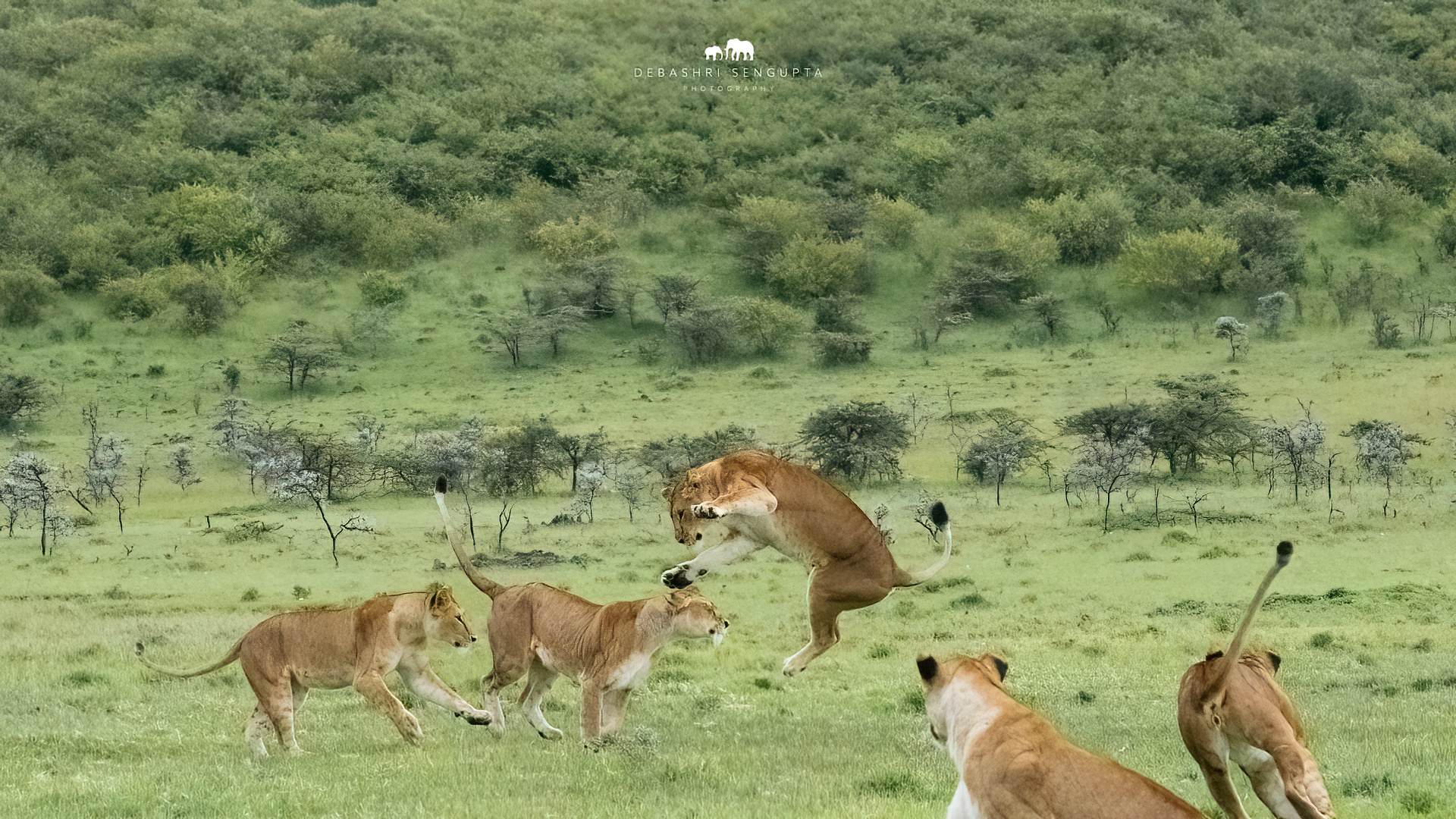
    A pride of lionesses play and spar on the lush green Maasai Mara plains

    Lionesses spar on a lush green plain — shoulder season’s vivid light and active predators make for extraordinary encounters. Photo: Debashri Sengupta

    🌿

    Shoulder Season

    May – June & Mid-October – Mid-December

    May and June are exceptional for intense predator behaviour. The landscapes are lush and beautiful, camps are quieter, and rates are meaningfully lower than peak.

    Pros

    • Fewer vehicles — a more solitary bush experience
    • Accommodation rates significantly lower than peak
    • Excellent predator activity and resident wildlife
    • Lush, photogenic landscapes after the rains
    • Easier bookings, more flexibility

    Cons

    • Possible occasional showers, especially May–June
    • Migration may not yet have arrived (or may have passed)
    • Some smaller camps reduce operations

    Shoulder season is the time I personally recommend for a more immersive and rewarding safari in Kenya. The wildlife is superb. The camps feel like yours.

    At a Glance

    Which Season Is Right for You?

    SeasonTimingBest For
    Off-Season
    Jan – Early May (excl. Easter)
    Budget-conscious travellers; photographers; those who value solitude above all else
    Peak Season
    July – October
    Migration-focused itineraries; first-time safari visitors; flexible budgets with advance planning
    Shoulder Season
    May – June, Oct – Dec
    Best overall balance of wildlife, value, and experience; anyone who wants depth without the crowds

    Final Thoughts

    There Is No Wrong Time to Visit Kenya

    Each season offers a genuinely distinct experience. The key is knowing what to expect, and planning accordingly.

    The animals don’t know it’s off-season. Kenya’s wild beauty is always waiting. The question is simply which version of it speaks to you.

    Choose Off-Season If…

    You value solitude and authenticity over spectacle. You’re drawn to lush green landscapes and understand that flexibility is part of the adventure.

    Choose Peak Season If…

    The Great Migration is the reason you’re coming to Kenya. Book well in advance and budget accordingly.

    Choose Shoulder Season If…

    You want the best overall safari experience — strong wildlife, quieter camps, fair pricing, and room to breathe. This is the choice we recommend most often.

    The Best Kenya Itinerary Is…

    Often one that crosses seasons — combining a Mara Reserve stay for the big spectacle with private conservancy nights for depth and night drives.

    Plan Your Safari

    Wanderlust Expeditions

    East Africa & India Specialists

    We are a US-based company specialising in East Africa and India — conservation-focused, ethically grounded, and deeply connected to the operators and guides who know these destinations best.

    Whether you are drawn to a boutique off-season camp, a shoulder season conservancy with night drives, or a peak season property perfectly positioned for the Migration crossings — we work across the full spectrum, always matching the right experience to the right traveller.

    Every itinerary we design starts with one question: what do you actually want to feel when you’re out there?

    Get in touch

    Ready to start planning your Kenya safari?

    Start the Conversation

    Wanderlust Expeditions  ·  East Africa & India Safari Specialists  ·  Conservation-Focused Travel

  • Kenya Safari on a Mid Budget vs Luxury — Which Is Right for You?

    Kenya Safari on a Mid Budget vs Luxury — Which Is Right for You?

    Kenya Safari · Insider Guide

    Mid-Budget vs Luxury:
    What Are You Actually
    Paying For?

    Wanderlust Expeditions · East Africa & India Specialists

    This guide covers Kenya specifically — the Masai Mara, Amboseli, Samburu, Laikipia, and the private conservancies that border the Mara. Between a $300–$700-a-night mid-budget property (shoulder season — expect 30–40% more at peak) and a $1,500-a-night luxury camp, the question isn’t just about comfort — it’s about what each dollar actually buys you in the Kenyan bush.

    The honest answer is more nuanced than most travel blogs admit. Mid-budget doesn’t mean roughing it, and ultra-luxury doesn’t always mean a better wildlife encounter. At Wanderlust Expeditions, we plan safaris across the full range — and we’ve seen both ends deliver extraordinary experiences, and both disappoint when the fit isn’t right. Here’s what really separates the two, and where the spending genuinely matters.

    Accommodation

    The Camp Experience: More Than Just a Bed

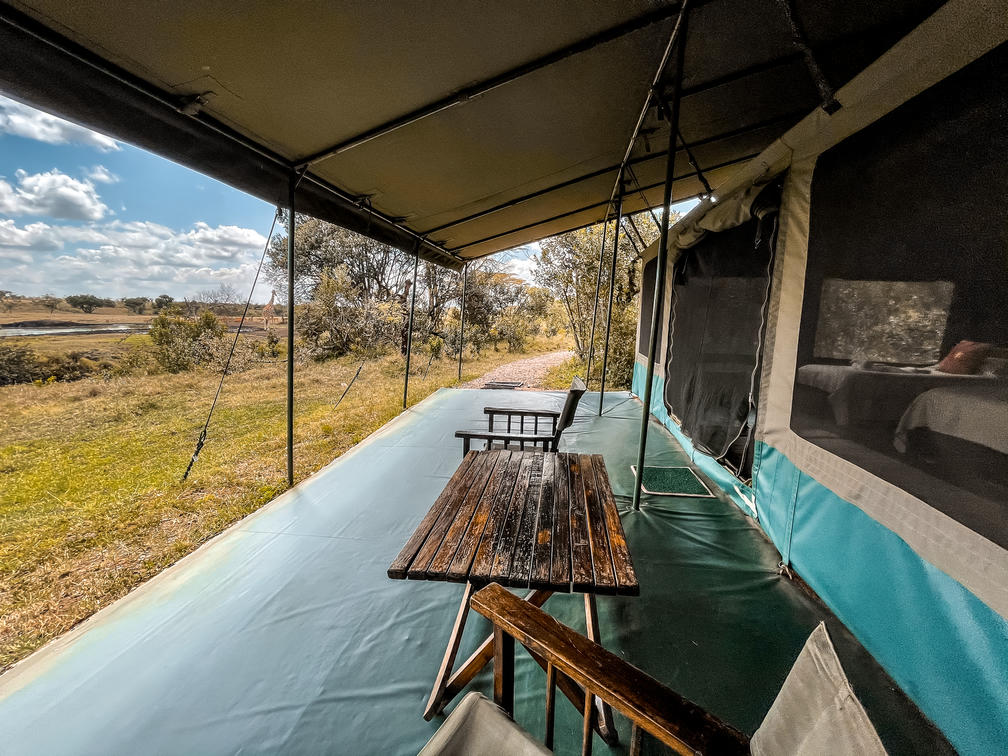
    Let’s start with the biggest misconception: mid-budget does not mean roughing it. Kenya’s mid-range camps include some genuinely excellent properties — boutique tented camps with proper canvas-and-wood structures, attentive service, good food, and that irreplaceable sensation of falling asleep to the sounds of the African night with nothing but canvas between you and the bush. Porini Mara, Rekero, Mara Siligi, Basecamp Masai Mara — these are not compromise options. They deliver a real, intimate, memorable safari experience.

    Comfortable beds at Porini Mara Camp

    Comfortable beds at the upper mid-budget Porini Mara Camp. Photo: Porini Mara Camp

    Mid-budget camps also vary considerably in style. Some are classic tented camps with a camp-like rhythm — communal meals, shared fire, game drives that feel like an adventure. Others are more lodge-based, with permanent structures, swimming pools, and a slightly more hotel-like feel. Neither is better; it’s a question of what kind of experience you’re after.

    Boutique mid-budget camp tent

    Boutique mid-budget camp tent. Photo: Mara Siligi Camp

    Where Luxury Pulls Away

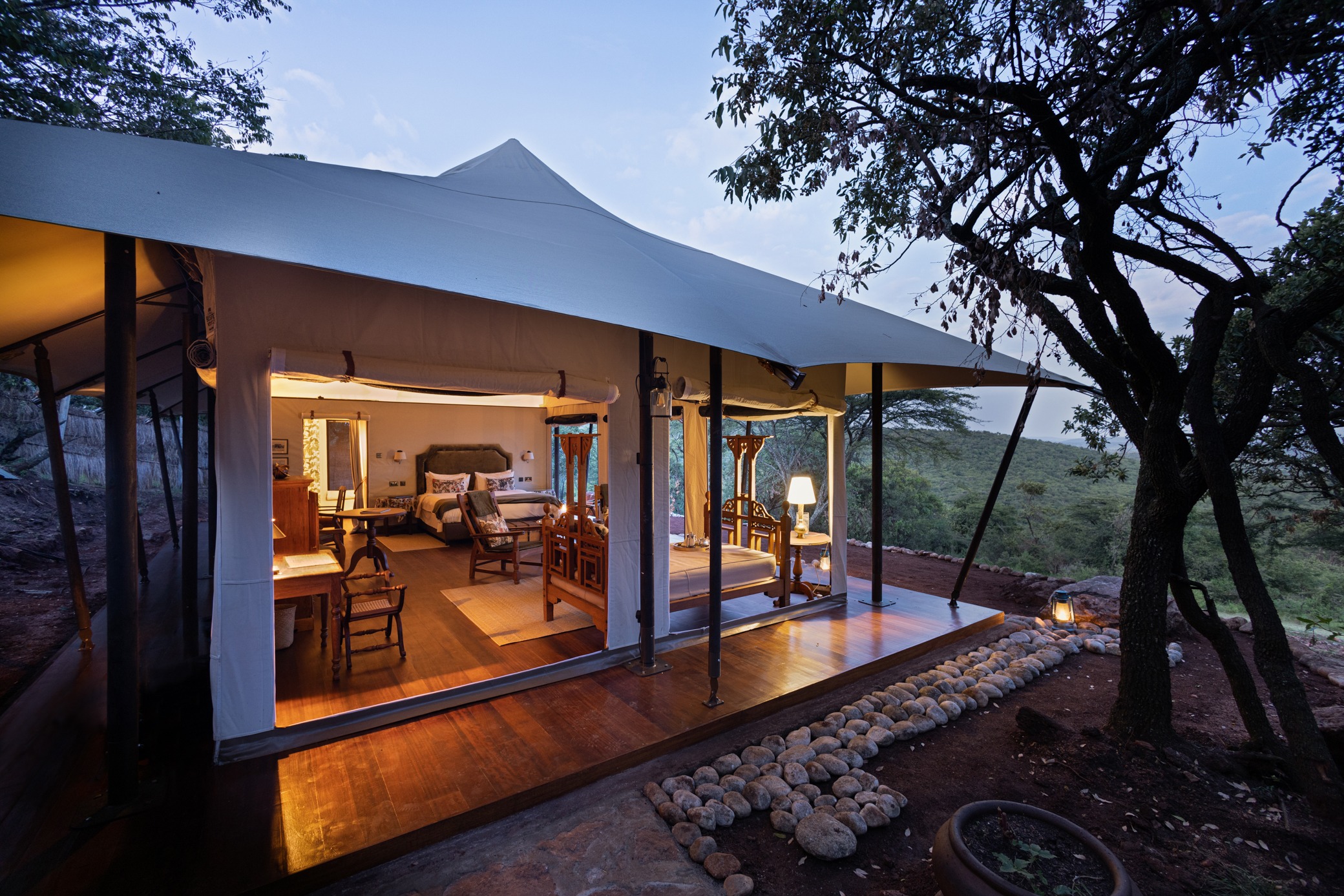
    The gap opens decisively when you step into a top-tier property. Luxury safari camps in Kenya — think Mahali Mzuri, Angama Mara, Cottar’s 1920s Camp, or Sanctuary Olonana — operate on a different register entirely. Freestanding copper bathtubs with a view of the plains, outdoor rain showers open to the sky, full lounge areas with daybeds and writing desks, walk-in closets, plunge pools overlooking game-rich valleys, curated minibars, and butler service that anticipates before you ask — essentially a private villa that happens to be in the African bush.

    The bathroom is often the clearest signal. A luxury camp gives you an outdoor shower under a canopy of stars while zebra graze twenty metres away. That experience — sky above you, bush around you — is something mid-budget camps don’t typically offer, though the canvas walls and African night sounds are very much part of both tiers. The difference is real — but it’s the difference between very good and extraordinary, not between acceptable and good.

    Outdoor shower at Asilia's Naboisho Camp

    Outdoor Shower in Asilia’s Naboisho Camp. Photo: Debashri Sengupta

    Living Room at Enkewa Camp

    Living Room at Enkewa Camp. This tent also has a separate, walk-in closet and a large bathroom area. Photo: Debashri Sengupta

    Luxury safari accommodation

    Luxury accommodation. Photo: Debashri Sengupta

    Game Drives

    The Vehicle Question: Shared or Private?

    This is, for many travellers, the most consequential practical difference between tiers — and one that’s often glossed over in brochures.

    At mid-budget camps, game drives are typically conducted in shared vehicles with four to six other guests. The vehicles are usually well-maintained open-sided 4x4s, guides are experienced and knowledgeable, and you follow designated tracks within the reserve. It’s a good experience — sometimes a great one.

    It’s worth being clear about something the industry doesn’t always say directly: exclusive vehicles are not a standard feature of luxury camps. Many luxury properties still operate shared vehicles — it is only at the ultra-luxury end that private vehicles become the norm. At mid-budget, private vehicle hire is usually available as an add-on — typically $300–$500 per day. If a private experience matters to you, this is often the most cost-effective upgrade you can make, at any camp tier.

    Where a private vehicle does make a meaningful difference: the guide can linger at a sighting as long as you want, time departures around your interests, and have a genuine, unhurried conversation with you — rather than managing six people’s questions simultaneously.

    On safari in the Masai Mara

    Photo: Debashri Sengupta

    The Guide

    Make or Break: Why the Guide Matters Most

    Here is something the industry rarely admits openly: the quality of the guide matters more than the quality of the vehicle, the camp, or the budget tier. A brilliant naturalist in a shared mid-budget vehicle will deliver a more meaningful safari than a mediocre guide in a private luxury Land Cruiser. We’ve seen it repeatedly, and it’s the single variable most travel agents fail to account for when they book.

    The good news is that Kenya has some extraordinary guides working across all budget levels. Some of the finest naturalists in the Mara ecosystem work at mid-budget conservancy camps — people who have spent decades reading specific landscapes, know individual animals by behaviour, and can interpret what’s happening around you in ways that transform a game drive into something close to a masterclass.

    The frustrating reality is that guide quality is inconsistent at every tier. At Wanderlust Expeditions, matching you with the right guide is treated as seriously as matching you with the right camp. It is not an afterthought.

    A guide with guests on safari

    A Guide is probably the most important element in your entire safari. Photo: Porini Camps

    Location

    Conservancies vs the National Reserve: Two Different Kenyas

    This is where budget tier and location intersect in ways that matter enormously for your actual experience — and where the luxury premium often delivers its clearest return on investment.

    The Masai Mara National Reserve is where most mid-budget camps operate. It’s a magnificent ecosystem — the most famous wildlife destination in Africa for good reason. But it is also, particularly during peak Migration season (July to October), extremely busy. Vehicle numbers at river crossings can reach absurd levels. It is still a profound experience — but the sense of solitude that many people associate with African safari is harder to find here at peak season.

    The private conservancies that border the Reserve — Olare Motorogi, Naboisho, Ol Kinyei, Mara North, Lemek, and others — operate under a different set of rules. Vehicle numbers are strictly capped. Off-road driving is permitted. Night drives and bush walks become possible. And because these conservancies are run in partnership with local Maasai communities, they carry a conservation and cultural dimension that the National Reserve cannot match.

    Access to the conservancies is, with a few exceptions, primarily through luxury and upper-mid properties that have acquired conservancy concessions. This is perhaps the strongest argument for spending more in Kenya: it’s not just about a better tent. It’s about a fundamentally different landscape and a fundamentally different quality of wildlife encounter.

    That said — Porini Mara Camp operates in Ol Kinyei Conservancy at mid-budget rates. Mara Siligi operates in a private conservancy. These are exceptions worth knowing about, and they represent some of the best value in Kenyan safari.

    Intimate wildlife experience in Naboisho Conservancy

    Intimate wildlife experience in Naboisho Conservancy. Photo: Debashri Sengupta

    Beyond the Mara

    Amboseli, Samburu & Laikipia

    Kenya is more than the Masai Mara, and the budget calculus shifts depending on where you go.

    In Amboseli — famous for its elephant herds and Kilimanjaro views — mid-budget options like Ol Tukai Lodge and Amboseli Serena deliver a genuine experience at reasonable rates. The park is smaller and more manageable than the Mara, which means less competition for sightings and a more relaxed atmosphere overall.

    Samburu, in northern Kenya, has a different character entirely: drier, more remote, with a distinct suite of wildlife found nowhere else in Kenya — the ‘Special Five’ (Grevy’s zebra, reticulated giraffe, Beisa oryx, Somali ostrich, gerenuk). Both mid-budget and luxury options exist here, and the experience is excellent at both levels because the destination itself is less visited and the wildlife encounters tend to be more intimate regardless of camp tier.

    Laikipia Plateau, northwest of Mount Kenya, is one of Africa’s great conservation success stories and home to some of Kenya’s finest wildlife properties. It’s predominantly luxury territory — Ol Pejeta Conservancy, Lewa Wildlife Conservancy, Borana, Ol Jogi — though mid-budget options exist and the rhino encounters here are extraordinary.

    Soroi Larsen's Camp, Samburu

    Soroi Larsen’s Camp, Samburu. Photo: Soroi Larsen’s Camp

    The Top of the Market

    Ultra-Luxury: White Gloves, Separate Luggage Vehicles & the Question of Whether It Matters

    Above the standard luxury tier sits a small category of properties where the experience becomes genuinely theatrical: Cottar’s 1920s Camp, Segera Retreat, Ol Jogi, the Angama properties. Prices here typically start at $1,500 per person per night and climb well above $2,000. Private chefs, private guides, private vehicles as a matter of course, and a level of personalisation that extends to pre-arranged surprises, private dinners in the bush, and itineraries built entirely around your interests.

    Does it translate to better wildlife? Not necessarily. Does it translate to a more extraordinary overall experience? For the right person, absolutely. These are properties for travellers for whom the setting, the service, and the storytelling are as important as the sightings — for whom a safari is not just a wildlife encounter but a complete sensory and emotional experience from first arrival to final departure.

    We don’t push this tier on anyone who doesn’t specifically want it. But we’re very good at identifying when it’s exactly the right fit — and when it isn’t.

    The Sundowner Ritual

    One ritual unites every tier of Kenyan safari: the sundowner. As the light turns golden and the game drives wind down, vehicles stop somewhere with a view — a kopje, a riverbank, an open plain — and drinks are poured. This is not exclusively a luxury experience. Some mid-budget camps go all-out. Mara Siligi, for example, sends a separate vehicle ahead to set up the sundowner before you arrive — a full spread of drinks, freshly prepared hot snacks, a bonfire already lit, and a butler on hand. You pull up to find everything ready, the plains stretching out in front of you, the fire crackling. It is, by any measure, extraordinary.

    At the luxury end, the production values are higher — linen napkins, something sparkling, a table set in the bush — but the fundamental magic is the same at every level. The bush doesn’t care what’s in your glass. And the light, at that hour, is the same for everyone.

    Sundowner in the Masai Mara

    Sundowner in the Masai Mara. Photo: Debashri Sengupta

    At a Glance

    How They Stack Up

    Mid-Budget Luxury Ultra-Luxury
    Nightly Rate $300–$700 ppShoulder season — 30–40% higher at peak $700–$1,500 pp $1,500–$2,500+ pp
    Tent Quality Tented camps or lodges; comfortable, en-suite, well-run Spacious designed interiors, bathtub or outdoor shower Exceptional suites; plunge pool, butler, bespoke finishes
    Exclusive Vehicle Add-on ($300–500/day)Shared vehicles included in rate Usually shared; private available as add-onConfirm when booking Private vehicle typically standard
    Guide Quality Good to excellent; variable — some of Kenya’s finest guides work at mid-budget camps Consistently strong; experienced Elite; deep territorial and animal knowledge
    Night Drives Conservancy camps onlyNot permitted in the National Reserve Conservancy camps onlyNot permitted in the National Reserve Conservancy camps onlyNot permitted in the National Reserve
    Off-Road Driving Conservancy camps onlyNot permitted in the National Reserve Conservancy camps onlyNot permitted in the National Reserve Conservancy camps onlyNot permitted in the National Reserve
    Walking Safaris Rare Some camps offer ✓ Often included
    Conservancy Access Some mid-budget camps inside conservancies Many are in conservancies; some in the Reserve Varies — some in conservancies, some in the Reserve
    Luggage Vehicle ✗ ✗ Some properties — yes
    Wildlife Access Determined by location and guide, not budget. A well-placed mid-budget camp in a prime conservancy equals any luxury property on game sightings. Porini Camps, for example, sit at the upper end of mid-budget and operate inside Ol Kinyei and Olare Orok — some of the most productive wildlife habitat in the entire Mara ecosystem.

    The Bottom Line

    So Which Should You Choose?

    The honest answer: it depends on what matters most to you — and what kind of experience you want to have.

    If you want the best possible wildlife encounters within a budget, a well-chosen mid-budget camp in a good location with a strong guide will deliver something extraordinary. Kenya is generous with its wildlife, and you don’t need to spend $1,500 a night to have a life-changing safari.

    If the total experience matters — the setting, the service, the food, the sense of complete immersion — and your budget allows, a luxury conservancy camp will give you something that goes beyond the wildlife itself. The best of these properties don’t just show you Africa — they make you feel like you belong in it, at least for a week.

    And for many travellers, the answer is both: a night or two at a mid-budget camp for the energy and the value, combined with a stay at a luxury conservancy for the depth. We design a lot of itineraries this way, and it tends to produce the most well-rounded, satisfying Kenya experiences we see.

    Choose Mid-Budget If…

    You want maximum nights in the bush, are travelling with a larger group, or want a first safari that delivers everything that matters at sensible cost.

    Choose Luxury If…

    Exclusivity, conservancy access, and the total quality of experience matter as much as the wildlife itself.

    Consider Both If…

    You want the energy of the Mara and the intimacy of a conservancy — combining tiers often produces the most complete Kenya experience.

    Talk to Us If…

    You’re not sure which fits. Matching the right experience to the right traveller is what we do. Tell us who you are and we’ll tell you where to go.

    Plan Your Safari

    Wanderlust Expeditions

    East Africa & India Specialists

    We are a US-based company specialising in East Africa and India — conservation-focused, ethically grounded, and deeply connected to the operators and guides who know these destinations best.

    Every itinerary we design starts with one question: what do you actually want to feel when you’re out there?

    Get in touch

    Ready to start planning your Kenya safari?

    Start the Conversation

    Wanderlust Expeditions  ·  East Africa & India Safari Specialists  ·  Conservation-Focused Travel